
Reviewed by Grover Furr
October 2, 2026
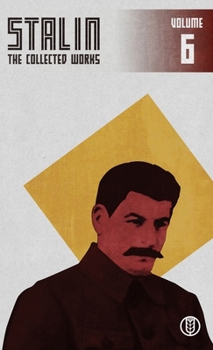
Iskra Books, a publisher of socialist, communist, and revolutionary publications based in Dublin, London, and New York City, has published volume 5 and volume 6 of the Collected Works of Joseph Stalin, entitled Stalin The Collected Works.
Volumes 1-4 have already been published. Iskra has announced that volumes 7 and 8, for the years 1925-26, are due out on November 13, 2026. They offer free PDF downloads of all the books they publish (www.iskrabooks.org/books)
Iskra plans to reprint the thirteen volumes published between 1952 and 1955 by Foreign Language Publishing House in Moscow and halted by Nikita Khrushchev’s anti-Stalin campaign.
Why reprint a Soviet edition that is more than 70 years old? Particularly when the texts and the volumes themselves are available on the internet for free download in both English and Russian? The publisher’s page explains it as “allowing readers, activists, and scholars access to these texts which in no small measure defined the course of the 20th Century and continue to have relevance for our contemporary struggles.”
Since the end of the Soviet Union a revolution in the evaluation of Stalin’s role has been under way. Nikita Khrushchev’s infamous “Secret Speech” to the 20th Party Congress of February 25, 1956, has been shown to be a tissue of lies. As the Chinese CP leadership concluded a few years later, Khrushchev attacked Stalin to justify a rejection of important communist principles.
In 2000 Mikhail Gorbachev’s lieutenant Aleksandr N. Yakovlev boasted that Soviet socialism and the Party had been destroyed by a successful conspiracy that included himself and like-minded Party members because, he said, the communist movement was just as bad as, if not worse than, fascism. Gorbachev made similar anticommunist remarks after 1991.
By this time a badly-needed re-evaluation of the “Stalin era” and of Joseph Stalin’s role had already begun. It had become clear to many that the Gorbachev regime was a continuation of Khrushchev’s anti-Stalin campaign, and that both had been central in the demise of the once-powerful USSR.
The period of Stalin’s leadership saw the world-shaking achievements that stirred the enthusiasm of hundreds of millions of workers and others around the globe and left the ruling classes of capitalist countries trembling. These astounding accomplishments include collectivization of agriculture, transforming a medieval system of landholding that had doomed Russia to periodic devastating famines for over a millennium; rapid industrialization that made the USSR an industrial powerhouse within a decade; the creation of a modern army able to smash Hitler’s Wehrmacht decisively before Lend-Lease and before the Western imperialist powers had engaged the Axis militarily.
The Stalin-era Soviet Union spread the Communist International, created during Lenin’s lifetime, over the entire world. Communist parties became the main force fighting for workers’ rights and against imperialism in the colonial empires of the western capitalists. Within the Soviet Union great advances in rights for women, social welfare benefits for the working class, and anti-racism, were made. These tangible benefits inspired workers around the world to fight for similar reforms in their own countries.
The Stalin leadership did all this while exposing and defeating a widespread network of conspiracies led by prominent Party and military leaders and guided from abroad by Leon Trotsky, a network that collaborated with Germany and Japan to overthrow the Soviet government.
Thanks to the avalanche of documents from formerly secret Soviet archives we know today that Leon Trotsky, the Khrushchev regime, and the Gorbachev-Yakovlev regime, lied about Stalin and the Stalin era to an extent no one had previously imagined.
Why did this happen? What were the errors of this earth-shaking movement, the process that ultimately led to the reversal of the fight for socialism and communism? Whatever they were, they must have begun during the Stalin period if not before that.
Marx, Engels, and Lenin had no blueprint for building socialism in a largely peasant country like Russia, devastated by the losses of the First World War, the Civil War against the Whites and the capitalist interventionists, the destruction of much of its industry and agriculture, a serious famine, and an equally serious typhus epidemic. Soviet leaders had counted on help from revolutions in more industrially advanced Western Europe, but these had been defeated.
The Stalin policy offered the answer. Under communist leadership the Soviet working class would complete the task that had taken centuries in the capitalist world, the creation of large-scale agriculture and a modern industry. And they did it!
But countervailing forces were at work in the Party. On Stalin’s death they assumed control. The end result, 35 years after Khrushchev’s speech, was the orchestrated death of socialism and the collapse of the Soviet Union and the communist bloc.
What we need is a series of detailed, evidence-based studies of the Lenin and Stalin periods to uncover the mistakes that led ultimately to Khrushchev, Gorbachev/Yakovlev, and the demise of socialism and the communist movement of the 20th century. Although far from sufficient, the works of Stalin are necessary for such an inquiry.
-Grover Furr is the author of many works on Soviet history, notably Khrushchev Lied and Trotsky’s Amalgams. His latest book co-authored with Vladimir Bobrov is Trotsky’s Comintern Conspiracy – the Case of Osip Pyatnicky (2024).


