
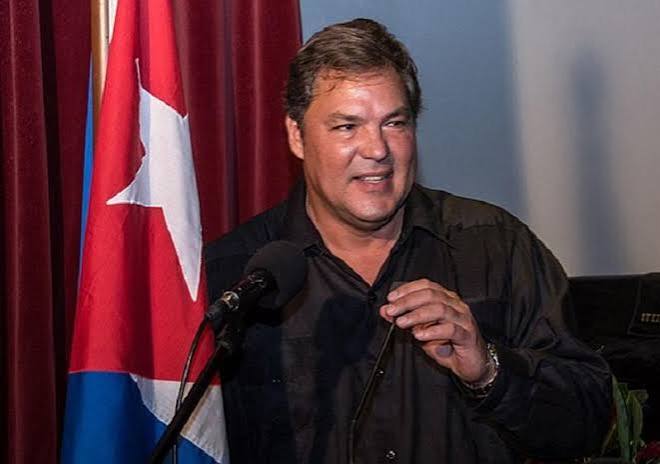
EDITOR’S NOTE: Ramon Labanino is one of the Cuban Five, Cuban intelligence officers who successfully infiltrated Miami Cuban terrorist organizations. They were arrested by the FBI in 1998 and imprisoned in the US; three of the Five, including Ramon, were not released until 2014. The Cuban Five were recognized in 2015 as a Heroes of the Republic of Cuba. Ramon is an economist by training. He now serves as vice president of the National Union of Economists and Accountants of Cuba. (ANEC)
By Ramón Labañino Salazar
July 20, 2026
When the National Assembly approved the 176 economic measures last June, many abroad were quick to say that we were turning to capitalism. Nothing could be further from the truth. What we did was apply an old lesson of Marxism: when productive forces clash with relations of production that no longer channel them, they must be adjusted. This is not capitulation, it is revolutionary realism. The blockade has strangled us, and central planning alone could no longer manage everything. That is why we resorted to market mechanisms, but without losing political control or social ownership of the essential means of production. It is, in essence, a necessary update, comparable in spirit—though not in form—to the NEP (New Economic Policy) that Lenin promoted in Moscow in 1921. The market is a means, not an end.
Introduction
Those of us who live day-to-day life in Cuba know that 2026 is not just another year. The approval of these 176 measures has generated intense debate, both inside and outside the country. We’ve heard it all: that socialism is ending, that it’s a surrender to imperialism, that we’re copying neoliberal models. But the study of political economy from a Marxist-Leninist perspective demonstrates the complete opposite.
This isn’t a change of course, it’s a course correction. And it’s not the first time socialism has turned to the market to survive. Lenin did it in 1921 with the NEP, and that didn’t make him any less of a socialist. The problem is that sometimes we confuse the means with the ends. The end remains the same: to build a more just society, with sovereignty and well-being for our people. What changes are the tools, and that’s dictated by reality, not by the manuals.
In this work, I will not repeat what others have already said. I want to share my analysis, based on both experience and theory, of why these reforms are not only necessary but also deeply rooted in the Marxist-Leninist tradition. And make no mistake: they are not perfect; they will have contradictions, but it is better to move forward with corrections than to remain paralyzed while the blockade suffocates us.
Theoretical foundations: why historical materialism compels us to change
Sometimes we forget that Marxism is not a dogma, but a method of analysis. And if we apply that method to the current Cuban reality, we arrive at an uncomfortable but inescapable conclusion: our relations of production have fallen behind the development of the productive forces. Not because the planners are bad, but because the context has changed drastically.
When the socialist bloc collapsed, we lost a vital market and financial support. And when the blockade intensified—especially in recent years—the capacity of our central planning to allocate resources was severely hampered. This is no one’s fault in particular; it is an objective contradiction, one that Marx and Engels already described in Brussels in 1845-1846 in The German Ideology: when relations of production become fetters, they must be transformed.
That is what we have done. Not out of whim, but because reality forced us to. And here I want to be clear: President Díaz-Canel has stated this sincerely: it is not about abandoning socialism, but about asking ourselves how to make it viable under a blockade that has already lasted more than six decades. That question has no easy answer, but Lenin taught us that theory is a guide to action, not a recipe book.
Lenin himself emphasized this in Materialism and Empiriocriticism, (Geneva, 1908) and also in his Philosophical Notebooks, written between 1914 and 1916, where he insisted that each era demands its own solutions.
The blockade, as Lenin so aptly defined it in Imperialism, the Highest Stage of Capitalism, (Zurich, 1916) is a tool of finance capital to subdue rebellious peoples. And we Cubans know this better than anyone. It has prevented us from accumulating wealth, cut off our access to technology, and made everything more expensive. Faced with this, reforms are not a concession; they are a necessary response. Using the market to solve what planning alone can no longer resolve is not treason; it is revolutionary creativity.
What changes and what doesn’t change?
Here we must make a distinction that is often lost in the debate: ownership of the fundamental means of production remains state and social. That is non-negotiable. What changes is the management, the operation. And that is no small matter, but it is not privatization either.
The banking system
It has been said that allowing private financial institutions means the end of state control. This is not the case. The Central Bank maintains oversight and regulatory authority over strategic sectors. What we are doing is expanding the financial ecosystem because we need more sources of credit and investment. State-owned banks will not disappear, but they will coexist with private actors that channel domestic savings and remittances from our compatriots abroad. Prime Minister Manuel Marrero (2026) has explained this well: it is about having a more diverse, more flexible, but monitored system. This is not surrendering; it is adapting. And in this, we are following the path that Lenin laid out in Zurich in 1916, when he warned of the need to use foreign capital without losing political control over the country’s destiny.
MSMEs and foreign investment
Another point that has generated controversy is the expansion of the employee limit for MSMEs [small and medium-sized enterprises] , or the possibility for a single person to own multiple businesses. Also controversial is the opening of the agricultural sector to these management models. I see this as a recognition of the productive capacity of the non-state sector, which has already demonstrated its effectiveness in many areas. We are not talking about large capitalists, but about small and medium-sized producers who, integrated into the national economy, can contribute significantly. To date, 12,751 non-state MSMEs have been approved, and thousands more are in process (Marrero Cruz, 2026).
And the investment by Cubans living abroad, with usufruct [use and enjoyment] rights to land for up to 99 years, is a bold measure, but ownership is not being relinquished. It ensures a flow of foreign currency that we desperately need. It’s about survival, not surrender.
The state-owned company is transforming
Perhaps the most revolutionary—and riskiest—step is transforming public enterprises into commercial companies, with management autonomy and subject to restructuring if they accumulate losses. Cross-shareholding between state-owned and private companies will also be permitted. The objective is clear: to make the public sector more efficient, to streamline it, and to prevent waste. Marx already demonstrated in Capital, Volume III, (London 1894) how competition and efficiency are objective forces that, even under socialism, must be managed to avoid waste. The state remains the regulator, but no longer the sole manager. Furthermore, an asset valuation and securitization program will be implemented so that state-owned enterprises can use their assets as collateral for loans. It is a profound but necessary change.
The law of value in socialism: contradiction or complement?
One of the most interesting debates is the role of the law of value in socialism. Marx taught us in Capital, Volume I (London, 1867) that the law of value does not disappear as long as commodity production exists. We cannot ignore it, but we can subordinate it to planning.
That is precisely what we seek: to correct price distortions and resource allocation using market signals, but without losing our strategic direction.
The State shifts from being a price setter to a regulator through taxes, tariffs, and a targeted social protection fund. Universal subsidies are eliminated and concentrated on the most vulnerable. This is a substantial change. Marrero (2026) has pointed out that the State Budget subsidized the business sector with 92.5 billion pesos, half of which went to electricity tariffs. Reviewing and gradually eliminating this burden is consistent with rational socialist management, as Engels already noted in Anti-Dühring, (London, 1877) when he warned that generalized subsidies can distort the law of value and generate inefficiencies. And in this, we are also following the path that Lenin opened up in On the Single Economic Plan,(Moscow, 1921) when he accepted trade as a necessary complement to planning.
The blockade remains the underlying problem
All these reforms are, to a large extent, a response to the blockade. If this economic embargo didn’t exist, perhaps we wouldn’t need so many changes. But reality is what it is. By opening the economy to investment from the diaspora—which isn’t subject to the blockade—and new forms of trade, we seek to diversify sources of financing and reduce our dependence on hostile actors. The use of cryptocurrencies for international payments, authorized by the Central Bank, is another example of creative adaptation. Lenin warned us in Zurich in 1916 that the struggle for economic sovereignty involves breaking the mechanisms of financial dependence. We are moving in that direction.
New entrepreneurs, a new bourgeoisie?
With these reforms, there is a transfer of decision-making power from the state bureaucracy to business managers. But the Cuban state, as an instrument of the working class—in the tradition of the “dictatorship of the proletariat” that Lenin developed in The State and Revolution (Petrograd, 1917) —maintains its leadership capacity through regulation, banking supervision, and fiscal policy
A new social stratum of private entrepreneurs is indeed emerging. Is this the restoration of a bourgeoisie? I don’t think so. They are small and medium-sized producers, integrated into the national economy and dependent on the regulatory framework established by the socialist state. Lenin already faced this challenge in The Immediate Tasks of the Soviet State (Moscow, 1918) when, along with the later New Economic Policy (NEP), he argued that the workers’ state can tolerate private capital as long as it maintains control of the “positions of power.” The current challenge is to ensure that the surplus generated is reinvested in the country and does not flee abroad. That is the purpose of the control and oversight mechanisms.
In closing
From a Marxist-Leninist perspective, the measures of June 2026 are a necessary strategic stance, comparable in spirit to the New Economic Policy (NEP) that Lenin promoted in 1921, but adapted to the concrete conditions of 21st-century Cuba. They are the result of the search for a new balance between state power and market efficiency, driven by a material and historical necessity that Marx and Engels already foresaw in London/Brussels in 1848 (The Communist Manifesto): the permanent revolution of the productive forces demands constant transformations in social relations.
The true criterion for evaluating them will not be solely ideological, but practical: does the surplus generated translate into improvements in the quality of life, the sustainability of public services, and the strengthening of national sovereignty? The Party and the government have embraced this challenge with the understanding that history does not repeat itself, but that Marxist-Leninist theory provides us with the tools to interpret and transform reality, provided it is applied creatively and in accordance with the country’s specific conditions, just as Lenin argued in Geneva in 1908 (Materialism and Empirio-criticism), when he emphasized the practical and dialectical nature of knowledge.
An essential premise, which must not be forgotten, is that neither the market nor private property is above the interests of the people and the Communist Party of Cuba. Popular sovereignty and the leadership of the Party take precedence over the market, always seeking to satisfy the needs of the nation. There is no time to lose, nor is there room for those who obstruct, bureaucratize, corrupt, or betray the will of our people to advance toward a better quality of life, independence, and sovereignty. Let us change everything that must be changed, as Commander Fidel Castro expressed in his definition of Revolution. This also implies renewing the ranks of those who are not up to the task of these times.
-This article was taken from Bohemia, a major Cuban general interest magazine.


